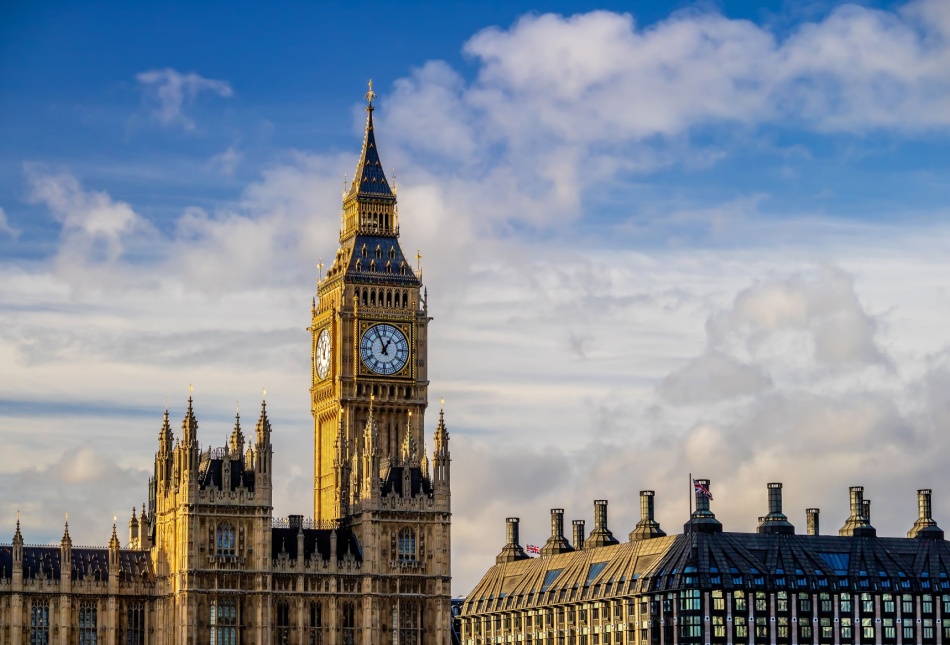
Just over three months after her lengthy Autumn Budget, chancellor Rachel Reeves has addressed the House of Commons and delivered the government’s 2026 Spring Statement.
Ahead of the Statement, Reeves reinforced the government’s commitment to “one fiscal event, one Budget, a year”. So, it will come as a relief to many, including business owners, that the Spring Statement included no additional tax-raising measures. Furthermore, no changes to pensions or Individual Savings Accounts (ISAs) were announced.
Reeves also said that household disposable income is set to grow at twice the rate that was forecast in the Autumn Budget – leaving the average person £1,000 better off each year by the next election.
That being said, previous announcements, including changes to the tax regime, remain in place, and may affect personal finances and business owners in 2026/27 and beyond.
Reeves gave an overview of the Office for Budget Responsibility’s (OBR) economic forecast for the years to come. Notably, the OBR’s forecasts and the Statement as a whole made no mention of the potential economic impact of the unfolding situation in the Middle East, which may contribute to increased oil and gas prices that could prove inflationary and cause stock market volatility.
The chancellor confirmed the changes announced in the 2024 and 2025 Budgets
In an effort to reduce speculation and prevent a chop-and-change approach, the chancellor confirmed that key tax measures, announced in the Autumn Budgets of 2024 and 2025, will remain in place.
Among the key changes that have been reconfirmed and will affect personal finances are:
- Inheritance Tax (IHT) will be levied on most unused pension benefits from April 2027. It’s estimated that this change will result in an additional 10,500 estates being liable for IHT in 2027/28. This will contribute to a predicted rise in IHT receipts to £15 billion by 2030.
- Tax on income earned from property will rise by two percentage points from April 2027, increasing tax liability for landlords.
- There will also be a two percentage point increase in the basic and higher rates of Dividend Tax from April 2026, which may affect business owners and investors.
- Key tax thresholds, including those for Income Tax and the IHT nil-rate bands, will remain frozen until April 2031.
The lack of any tax-raising measures in the Spring Statement will be welcome news for many people. However, the previously announced changes could mean a review would still be beneficial.
The Office for Budget Responsibility has updated its forecasts for GDP growth, inflation, and house prices
The OBR has updated its real-terms GDP forecast every year between 2026 and 2029 when compared to the estimates it made in the 2025 Autumn Budget. The organisation now expects the economy to grow by:
- 2026 – 1.1% (a decrease of 0.3%)
- 2027 – 1.6% (unchanged)
- 2028 – 1.6% (an increase of 0.1%)
- 2029 – 1.5% (unchanged)
The OBR expects inflation to be at or around the Bank of England’s (BoE) 2% target over the next five years. Inflation easing would improve household spending power, which, in turn, could provide a boost for the economy and businesses. Indeed, real household disposable income is expected to grow by between 0.6% and 0.9% each year until 2030.
The BoE has already cut its base interest rate several times since the current government formed in July 2024, as inflationary pressures eased. If the OBR’s forecast is accurate, the BoE is likely to make additional cuts, which would reduce the cost of borrowing for households and businesses.
The OBR expects unemployment to rise from 4.75% in 2025 to a peak of 5.33% in 2026, driven by weaker demand for labour. After peaking in 2026, unemployment is expected to fall to 4.1% in 2030.
It also forecasts that house prices will rise by between 2.4% and 2.9% each year between 2026 and 2030.
The government reinforced its ongoing commitment to two key fiscal rules
In her speech, the chancellor confirmed the two fiscal rules set out in the Budget:
- Stability rule – Not to borrow money to fund day-to-day public spending by the end of this parliament (2029/30).
- Investment rule – To reduce government debt as a share of national income by 2029/30.
Addressing the stability rule first, although the cost of borrowing has risen during this period of heightened uncertainty, the chancellor vowed that the steps taken in the Statement will restore its headroom.
Turning next to the investment rule, Reeves also stated that this commitment will be met two years early, with net financial debt predicted to be 82.9% of GDP in 2025/26.
4 key Spring Statement measures
1. Boosting defence spending
At a time of growing worldwide tension, the chancellor announced increases to defence spending, aimed at making the UK a “defence industrial superpower”. Defence spending is set to reach 3.5% of GDP by 2035.
Defence innovation will include harnessing AI and drones, creating employment opportunities for engineers in the devolved nations, while a previously announced Defence Growth Board is also being created to support £400 million for defence innovation.
2. Tackling youth unemployment
The chancellor reconfirmed her commitment to getting those in Britain who can work into work. She stated that 1 in 8 young people is currently not in employment, education, or training.
The chancellor confirmed that reforms to the welfare system will produce welfare savings of £4.8 billion between 2026 and the end of the forecast period (2029/30).
3. Increasing property revenue
Previously announced property planning reforms will go ahead.
The reforms are expected to increase real levels of GDP by 0.2%, the equivalent of £6.8 billion for the economy, by 2029/30. Over 10 years, this is expected to increase to 0.4% of GDP (£15 billion). Reeves said this represents the biggest growth forecast for a policy with no fiscal cost.
4. Making government more efficient
The abolition of NHS England was announced back in March 2025 as part of wider efforts to increase NHS efficiency and productivity, and to cut spending. These measures will also include reducing costly agency outsourcing.
More widely, Reeves confirmed the £3.25 billion of investment in a new “transformation fund” that will drive modernisation across the public sector through digital reform and the adoption of AI. It’s hoped that these changes will result in a “leaner” and more efficient public sector.
After announcing a raft of changes in the Autumn Budget, the Spring Statement acts as a fiscal pitstop, upholding the government’s commitment to one significant fiscal event a year.
Please note
All information is from the chancellor’s speech, the gov.uk website, the Spring Statement press release and the Autumn Budget documents published by HM Treasury.
The content of this Spring Statement summary is intended for general information purposes only. The content should not be relied upon in its entirety and shall not be deemed to be or constitute advice.
While we believe this interpretation to be correct, it cannot be guaranteed, and we cannot accept any responsibility for any action taken or refrained from being taken as a result of the information contained within this summary. Please obtain professional advice before entering into or altering any new arrangement.
The Financial Conduct Authority does not regulate tax planning.
The value of your investments (and any income from them) can go down as well as up and you may not get back the full amount you invested. Past performance is not a reliable indicator of future performance.
Investments should be considered over the longer term and should fit in with your overall attitude to risk and financial circumstances.